

Summer holidays often bring slower mornings, later bedtimes and more time together as a family. When nursery, daycare or preschool begins again, babies and toddlers may need a little time to adjust.
A calm transition is not about returning to a perfect routine overnight. It is about gradually creating predictability through familiar rhythms, simple rituals, extra closeness and comforting objects your child already knows.
It can also be a helpful moment to organise and label the belongings your child brings each day, from clothing and comforters to a familiar pacifier with their name.
A good transition is created gradually through predictability, familiar rituals, extra closeness and things your child already associates with comfort.
Why routines may feel different after a holiday
Young children often rely on repetition to understand what is happening next. During a holiday, many of the small signals that usually shape the day can change.
- Wake-up times may be later.
- Meals may happen at different times.
- Naps may be shorter, longer or less predictable.
- Bedtime routines may be more relaxed.
- Mornings may feel slower.
- Your child may spend more time with parents or other close family members.
Returning to a busier environment can therefore be tiring, even for a child who usually enjoys nursery or daycare.
The aim is not to force your child back into a strict schedule as quickly as possible. A smoother transition is often created through gradual change, familiar rituals and realistic expectations.
Begin a few days before the first nursery day
Where possible, begin reintroducing parts of your usual routine a few days before your child returns.
You do not need to change everything at once. Choose the rhythms that make the greatest difference to your morning.
- A more consistent wake-up time
- Regular meals and snacks
- Naps closer to the usual nursery schedule
- A gradual return to the normal bedtime
- Calmer and more predictable mornings
Even small changes can make the first day feel less sudden.
Practise the morning rhythm
Try following the same basic sequence your family will use on nursery mornings.
- Wake up.
- Get dressed.
- Eat breakfast.
- Brush teeth or wash hands and face.
- Pack the final belongings.
- Put on outdoor clothing.
- Leave home.
The morning does not need to run perfectly. The value is in making the order feel familiar.
Adjust sleep and daily rhythms gradually
Sleep patterns rarely change in a single evening.
If your child has been going to bed later during the holidays, consider moving bedtime and wake-up time by around 15–30 minutes at a time. Continue gradually until the rhythm is closer to what your family needs on nursery days.
This can feel gentler than making a large change the night before.
A calm bedtime routine may include:
- Dimmer lighting
- A bath or wash
- Pyjamas
- A story
- A familiar song
- A cuddle
- The same short goodnight phrase
- A familiar pacifier or comforter, when normally used
Consistency matters more than complexity.
Prepare your child for returning
Talk about nursery or daycare in a calm and positive way before the return.
For babies, your tone and repetition may matter more than the exact words. Toddlers may benefit from short, concrete explanations.
- Talk about seeing familiar children and adults again.
- Look at photos from nursery.
- Walk past the building or playground.
- Talk through the usual parts of the day.
- Pack the nursery bag together.
- Let your child choose between two familiar items to bring.
Try not to promise that your child will not feel sad. Even a child who is pleased to return may still cry at drop-off.
Instead, offer reassurance that remains true:
“You might miss me, and I will come back.”
This gives your child both honesty and comfort.
Keep drop-off short and predictable
A long or uncertain goodbye can sometimes make separation more difficult.
A simple drop-off routine may look like this:
- Help your child settle into the room or activity.
- Give them a hug.
- Use your usual short goodbye.
- Clearly say that you will return.
- Leave calmly once the goodbye has been said.
Your child may still become upset. This does not mean the routine has failed.
A predictable goodbye helps your child learn what happens, even when the separation feels difficult.
Whenever possible, avoid leaving without saying goodbye. A clear departure supports predictability and trust.
Normal reactions after returning to nursery
Even children who previously felt completely at ease in nursery may react differently after a longer break.
You may notice:
- More crying at drop-off
- A greater need for closeness
- Increased tiredness
- Restless sleep
- Changes in appetite
- A greater need for a pacifier or comforter
- More sensitivity later in the day
- Stronger emotional reactions at home
These responses can be part of adjusting to a change in pace, surroundings and separation.
Your child may have spent the day managing new impressions, sounds, activities and social contact. Home is often where those feelings are released.
Extra closeness, quieter evenings and fewer demands can be helpful while the everyday rhythm becomes familiar again.
Make your child’s pacifier easy to recognise
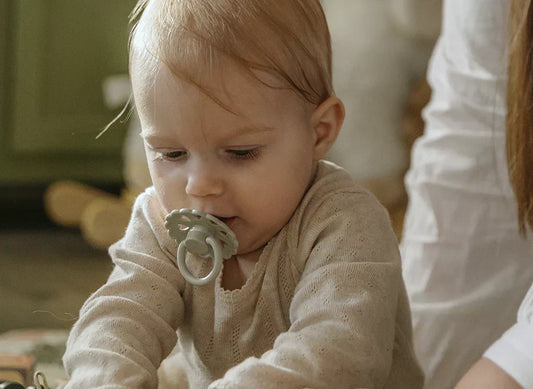
Pacifiers are often part of daily nursery life, particularly during naps, moments of separation or situations where a child needs extra comfort.
Many children may bring pacifiers in similar colours, shapes or designs. During a busy day, a pacifier can easily end up in the wrong storage box, among another child’s belongings, inside a bag or near a sleeping area.
Personalisation cannot guarantee that a pacifier will never be misplaced. It can, however, make it easier to identify.
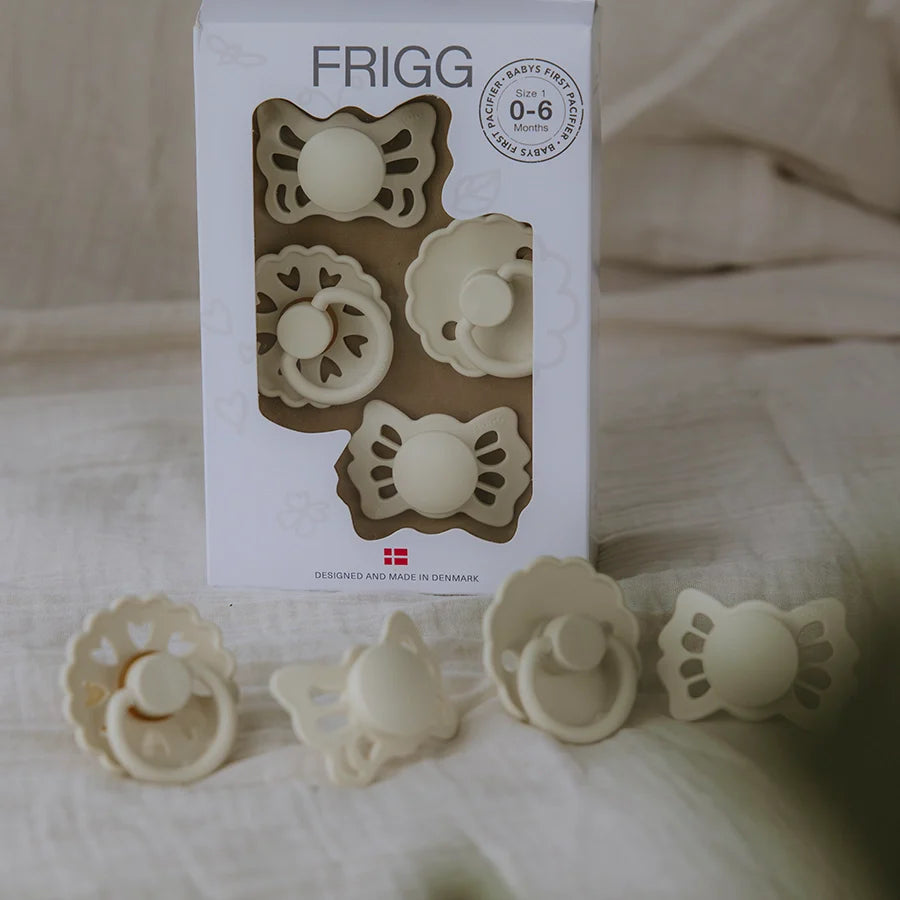
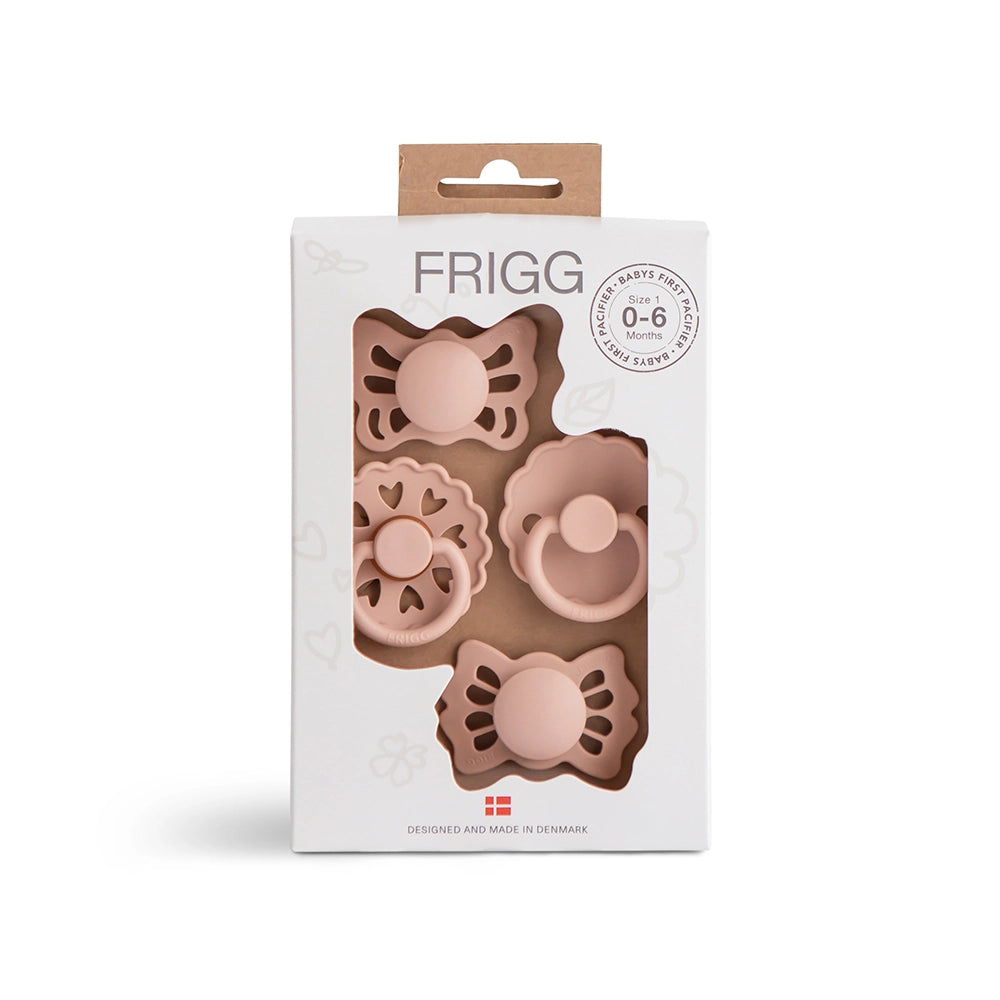
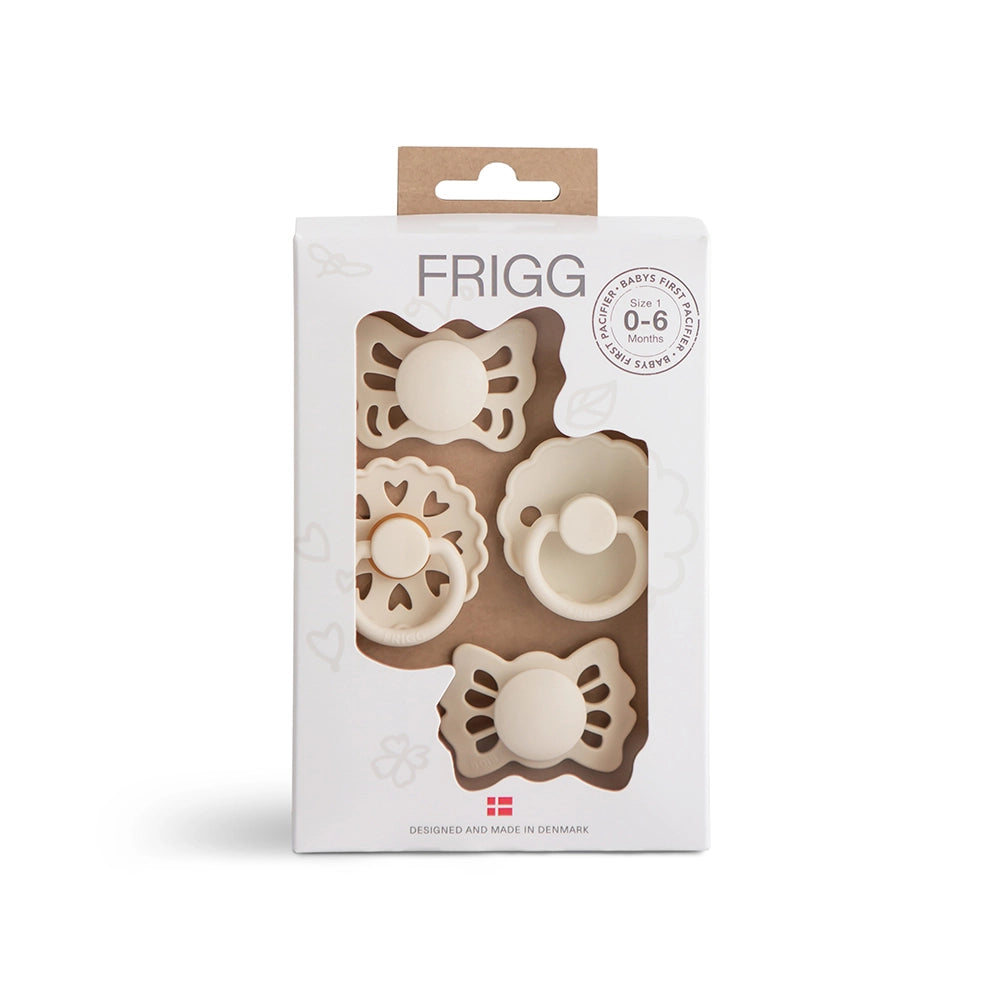
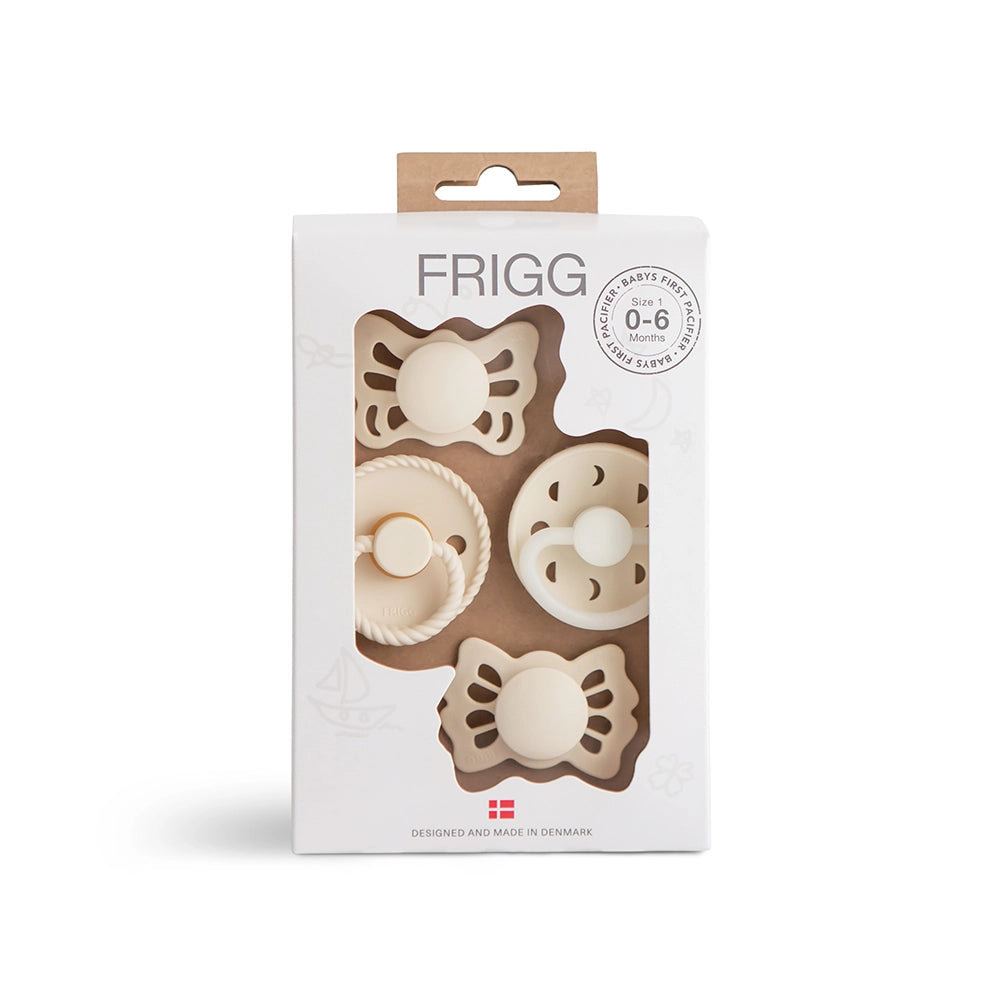
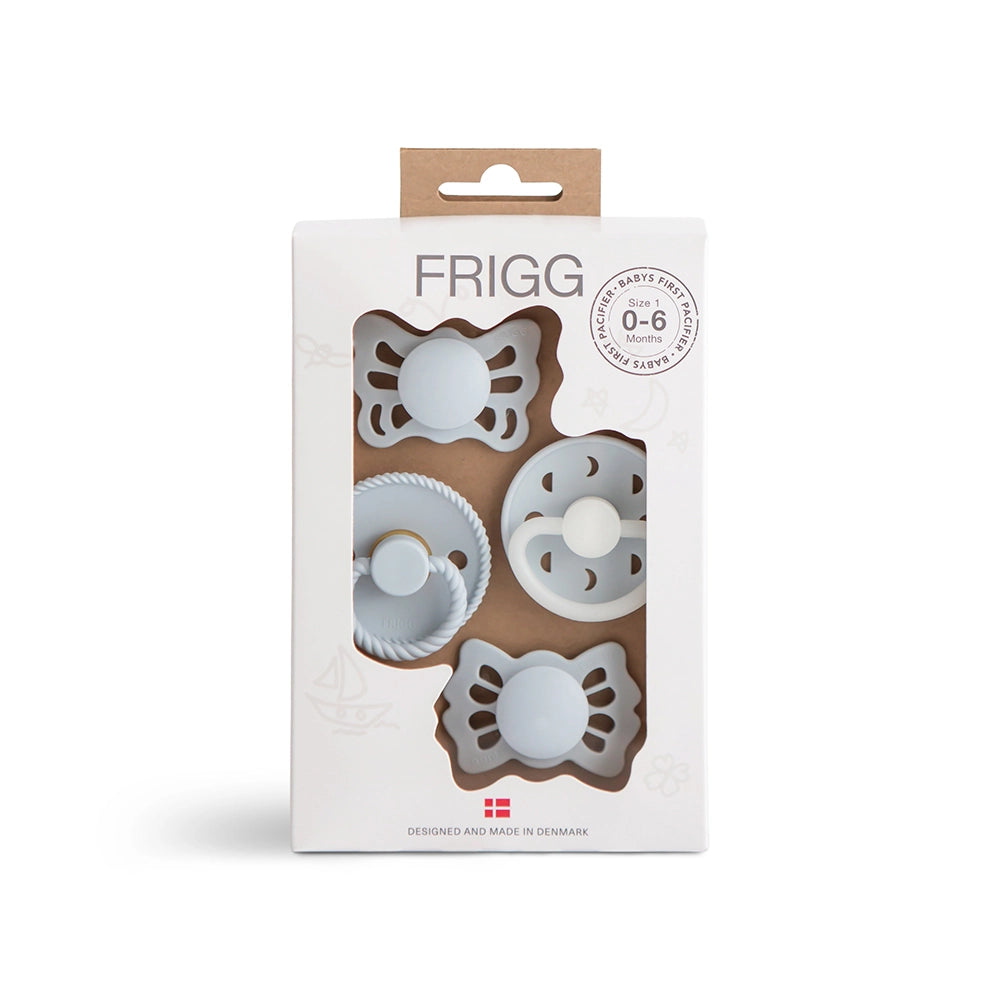
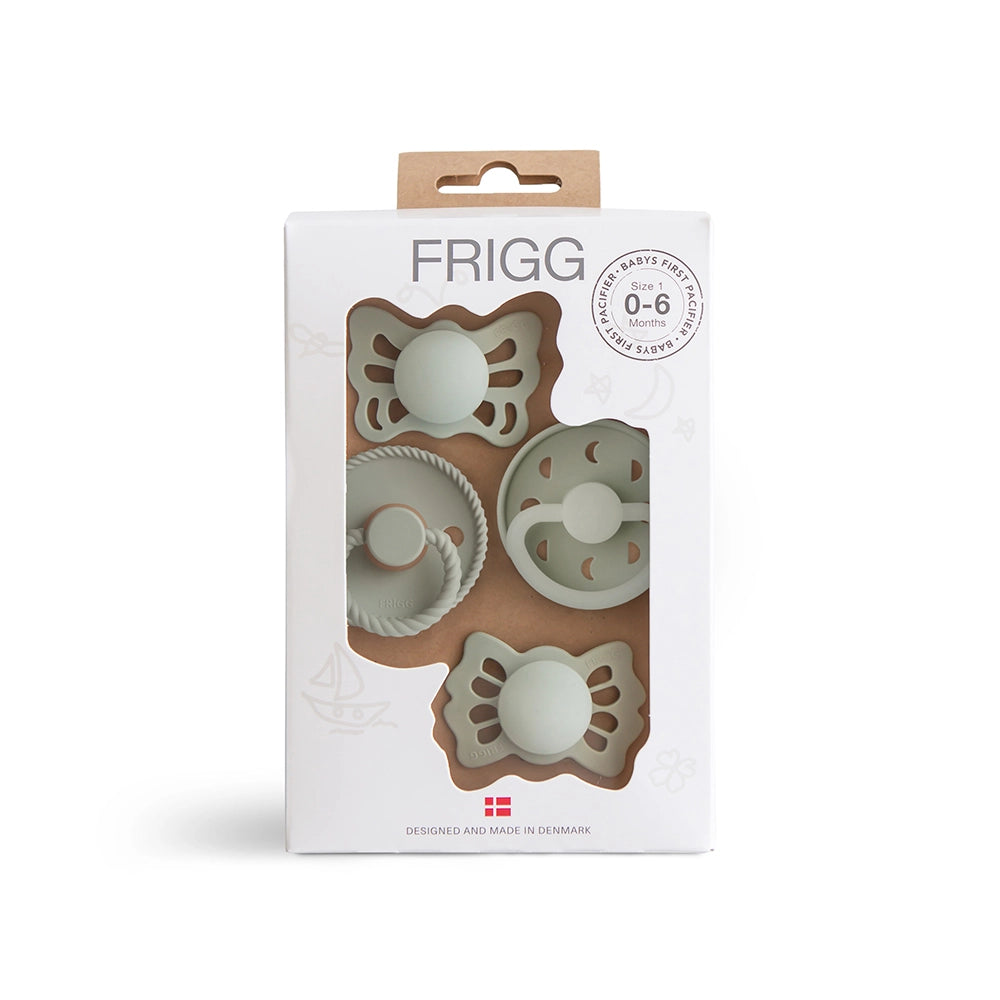
A personalised FRIGG pacifier with your child’s name can help:
- Make the pacifier easier to recognise.
- Help staff see who it belongs to.
- Reduce the risk of mix-ups.
- Make it easier to return to the correct child.
- Keep a familiar source of comfort within reach.
- Combine a practical detail with a personal expression.
A familiar pacifier can be a small but important part of your child’s comforting routine. With your child’s name on the pacifier, it also becomes easier for both parents and nursery staff to recognise.
It may offer familiarity:
- At drop-off
- During naps
- In busy or unfamiliar situations
- When your child misses you
- When your child needs extra reassurance
Explore personalised FRIGG pacifiers
Choose what your child already knows
Nursery preparation is usually not the ideal moment to introduce several changes at once.
Choose the same pacifier shape and size your child is already comfortable using. Pack an extra pacifier where possible, and label the pacifier case and other belongings with your child’s name.
Always follow the nursery’s own policies regarding pacifiers, pacifier clips and comfort objects.
A practical nursery and daycare packing list
Requirements vary between countries, seasons and individual childcare settings. Always check the nursery’s own recommendations before packing.
- Extra bodysuits, tops, trousers and socks
- Indoor shoes or slippers, where required
- Rainwear or waterproof clothing
- A sun hat or warm hat, depending on the season
- A drinking cup or bottle, if requested
- A familiar comforter
- A pacifier
- An extra pacifier
- A pacifier case
- Name labels
- Nappies and wipes, if not supplied
- Any agreed care products
- Seasonal outdoor clothing
- A bag for wet or dirty clothes
Label clothing, comfort items, pacifier cases and other belongings clearly. A personalised pacifier can make one of the smallest and most frequently used items easier to identify.
Plan quieter afternoons
A nursery day may require more energy than a holiday day.
During the first days back, try to keep afternoons and evenings relatively calm where possible.
- Quiet play at home
- Extra time together
- An early evening meal
- A calm bath
- An earlier bedtime
- Fewer social plans
- Less pressure to complete errands
Your child does not need to be entertained after a full day. Familiar surroundings and time close to you may be enough.
Pay attention to sleep and naps
Nursery naps may be different from naps at home.
Your child may sleep for a shorter time because the surroundings are busier. They may also sleep longer because the morning has been more stimulating.
Ask staff how long your child slept and use that information when planning the evening.
- Adjust bedtime according to the day’s nap.
- Accept an earlier bedtime during the transition.
- Watch for signs of tiredness rather than relying only on the clock.
- Avoid keeping your child awake when they are clearly tired.
A temporarily earlier bedtime is not necessarily a new permanent routine. It may simply be what your child needs while readjusting.
Work together with nursery staff
Sharing a little relevant information can help staff support your child more consistently.
You may wish to mention:
- How your child has been sleeping
- Whether meal times have changed
- What usually helps your child settle
- Whether a pacifier is used for naps or comfort
- Any larger changes within the family
- How your child responded to the holiday
- Whether your child has recently needed more closeness
- Which familiar phrases or rituals you use at home
Keep the information practical. Staff do not need every detail of the holiday, but a few useful observations can help them understand your child’s needs.
You can also ask how your child has eaten, slept and settled during the day. This makes it easier to adapt the evening without guessing.
Returning to childcare happens at different times across Europe
The return to everyday life does not happen at the same time for every European family.
In Nordic countries, many families return to their usual routines from late July and throughout August. Across Central Europe, the return may be spread across August. In Southern Europe and parts of Western Europe, many families return later in August or at the beginning of September.
Many nurseries and daycare settings also remain open during the summer, but may operate with holiday care, reduced staffing or temporary groups made up of children from different locations.
The exact date matters less than the transition itself.
Whether your child returns in July, August or September, the same gentle principles can help:
- Begin gradually.
- Create predictable rhythms.
- Repeat familiar rituals.
- Allow space for emotional reactions.
- Keep afternoons calm.
- Stay in close contact with staff.
- Bring familiar, clearly labelled comfort items.
A gentle return to familiar days
Returning to nursery after the holidays is not about creating a flawless routine.
Some children settle back quickly. Others need more time, more sleep, more closeness or a little extra help at drop-off.
A good transition is created gradually through predictability, familiar rituals, patient reassurance and small things your child already connects with comfort.
A familiar pacifier can be one of those small things. Adding your child’s name makes it easier to recognise while keeping a trusted part of their routine close during the nursery day.